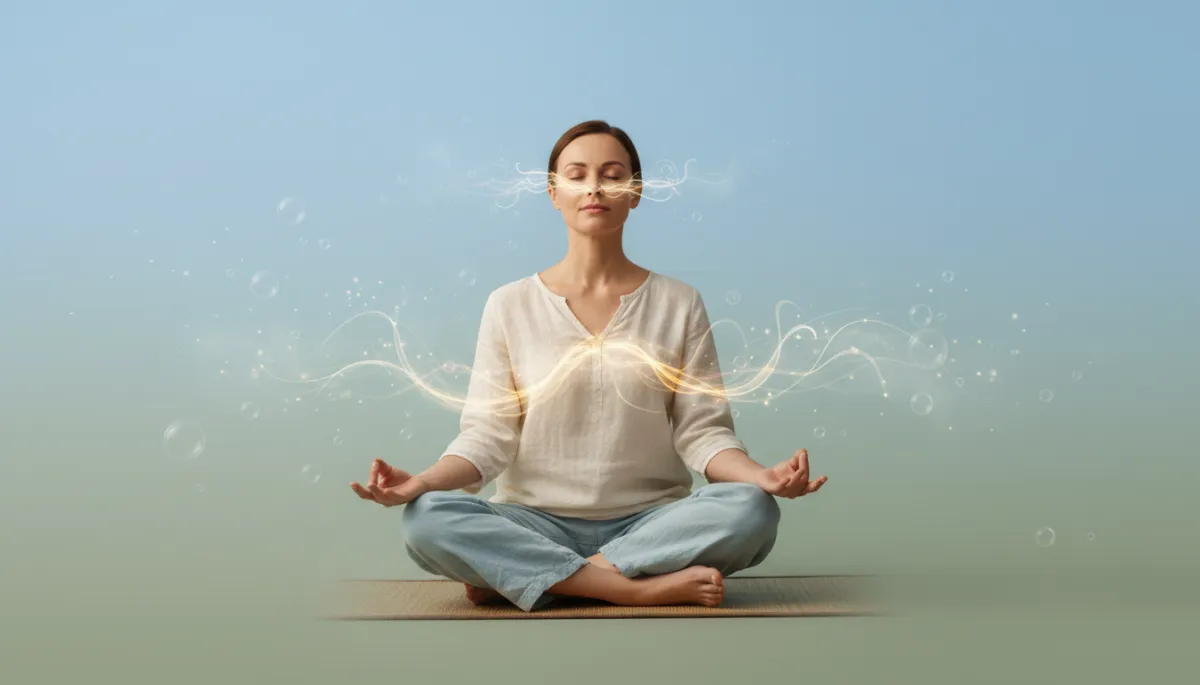
Calming Breath Exercise for Engineers
Mental Health, Breathing Techniques
How to Do the Calming Breath Exercise
The calming breath exercise is a simple, repeatable technique you can use to quickly reduce anxiety, ease hyperventilation, and reach a deep state of relaxation in just a few minutes.
What Is the Calming Breath Exercise?
The calming breath exercise was adapted from the ancient discipline of yoga. It is a very efficient technique for achieving a deep state of relaxation quickly. It can be a potent technique for halting the momentum of a panic reaction when the first signs of anxiety come on. It is also useful in reducing symptoms of hyperventilation or over-breathing, which can cause light headed-ness and further panic. Practice regularly for at least 5 minutes per day to reduce stress, anxiety and panic.
💡 Pro Tip: You can use this technique almost anywhere—at your desk, on a break, or before sleep. The more consistently you practice it, the more naturally your body will learn to relax.
Why This Technique Works: Relaxation and Hyperventilation Control
When anxiety rises, your heart rate increases, your breathing becomes shallow and fast, and your body can feel out of control. The calming breath exercise helps by:
Acting as a technique for achieving a deep state of relaxation by slowing your breathing and signaling safety to your nervous system.
Reducing symptoms of hyperventilation by normalizing your breathing rhythm and CO₂ levels, which helps with dizziness, tingling, and that “I can’t catch my breath” feeling.

Slow, intentional abdominal breathing can quickly interrupt the feedback loop of panic.
Step-by-Step: How to Do the Calming Breath Exercise
Here is how to do the calming breath exercise:
Breathing from your abdomen, inhale slowly through your nose to a count of five. That is count slowly “one…two…three…four….five” as you inhale.
Pause and hold your breath to a count of five.
Exhale slowly through your nose or mouth to a count of five (or more if it takes you longer). Be sure to exhale fully.
When you have exhaled completely, return to normal breathing for two breaths.
Then repeat the steps above for at least 5 minutes. This should involve at least 10 cycles. If you start to feel light headed, stop for 30 seconds, or breathe a few extra normal breaths, then start again. Try this exercise whenever you feel anxious and see the calmness it brings.
📌 Key Takeaway: Inhale for 5 seconds, hold for 5 seconds, exhale for 5 seconds, take two normal breaths, then repeat for at least 10 cycles.
Practice Schedule: Think of It as Daily Maintenance
You do not need to wait until you feel very anxious to use this exercise. Practice regularly for at least 5 minutes per day to reduce stress, anxiety and panic. Consider:
Doing one 5-minute session before work or before starting your day.
Adding another session after a stressful situation, difficult conversation, or busy period.
💡 Pro Tip: Put a recurring reminder titled “Calming Breath – 5 minutes” on your phone or calendar to help build the habit.
A Simple Timer Script for Your Breathing Cycles
If you like using a timer, here is a minimal Python script that guides you through the counts. Run it in a terminal and follow the prompts. Each phase uses a 5-second count, matching the core steps of the calming breath exercise.
You can tweak the cycles parameter or the timing to suit your comfort level, but keep the structure aligned with the original technique.
Reference
Reference: Bourne, E. (2005), The Anxiety & Phobia Workbook, New Harbinger Publications, USA.